First-Time Custom Suit Jacket Order Mistakes and How to Avoid Them
The biggest mistakes on a first order of custom suit jackets are choosing cloth from a photo, buying construction on price alone, oversizing the logo, giving everyone one cut, rushing the mockup and leaving no time before first wear. Custom Suit Jackets sees each of these on new team orders, and every one is easy to avoid if you decide early.
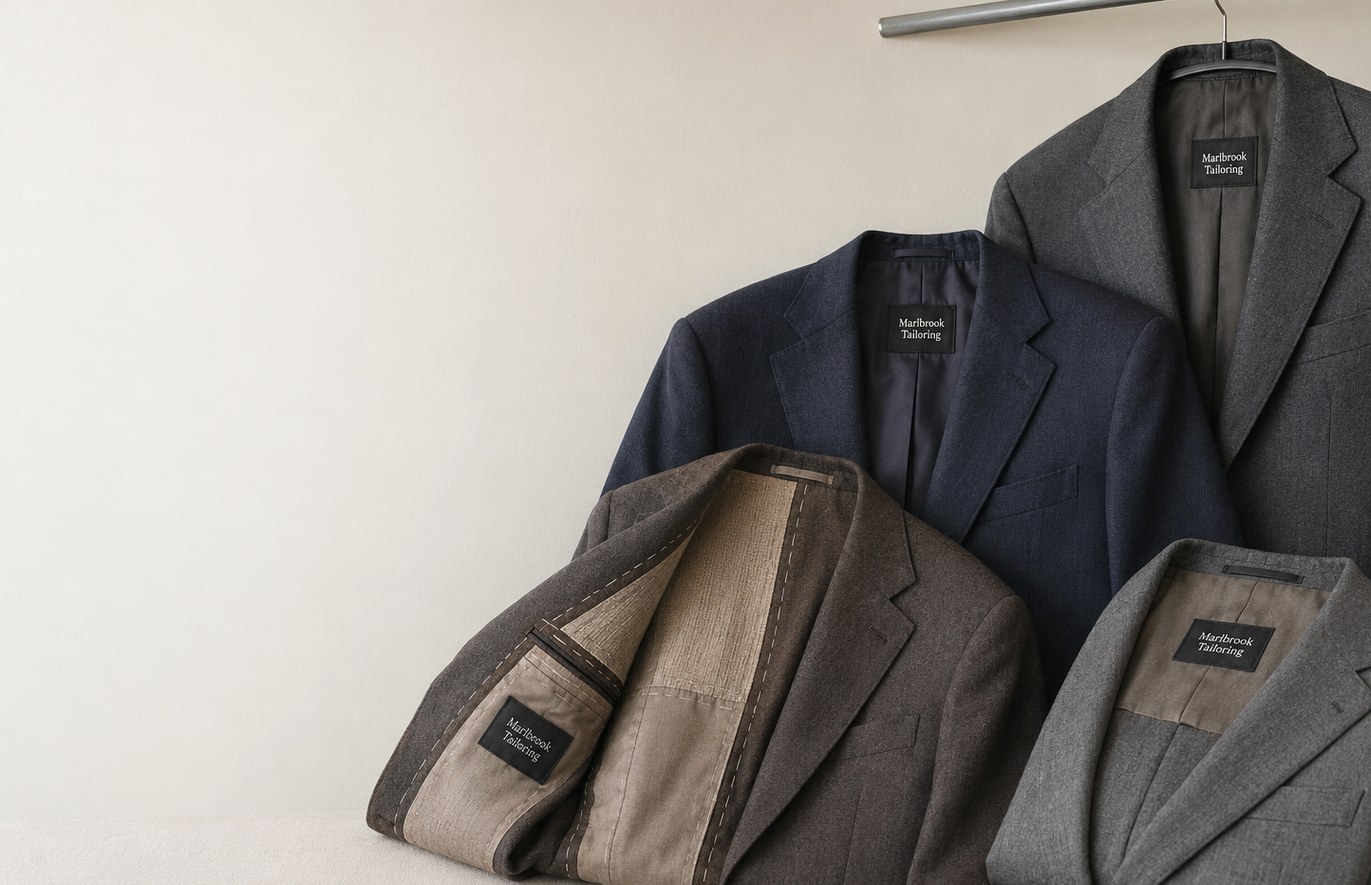
- Choose cloth by weight, weave and finish, not only color
- Half-canvas suits daily wear; unstructured suits warm, active roles
- Keep chest logos small and use buttons or linings for extra branding
- Free mockup within 24 hours, unlimited revisions, about 2 weeks turnaround
- Minimum order of 12 jackets per the site FAQ
What are the most common mistakes on a first custom suit jacket order?
The most common mistakes on a first custom suit jacket order are choosing cloth from a screen photo, picking construction on budget alone, oversizing the logo, forcing one cut on every role, approving the mockup too quickly, collecting sizes late and leaving no buffer before the date staff first wear the jackets. Each one is avoidable with a single decision made early.
None of these mistakes are about bad tailoring. They happen on the buyer side, usually because the person placing the order has never bought tailored uniforms before and treats suit jackets like branded polos. A polo forgives a guessed size, a loud logo and a rushed approval. A suit jacket does not: it is structured, it is worn close to the body and it is seen at conversational distance by clients and guests.
The good news is that a first order is also the easiest one to get right, because nothing is locked in yet. The sections below walk through each mistake in the order it tends to happen, from choosing the cloth to handing jackets out, and what to do instead.
- Cloth chosen from a photo instead of in hand
- Construction chosen on budget alone
- Branding that is too large or in the wrong place
- One cut for every role and every body
- A mockup approved without a detail check
- Sizes collected too late or self-reported
- No buffer between delivery and first wear
- No written record of the approved specification
Why is choosing suit jacket cloth from a photo a mistake?
Choosing suit jacket cloth from a photo is a mistake because screens shift navy toward black, flatten texture and hide sheen, so the jackets that arrive can read very differently from the swatch you picked. Ask about cloth weight and weave as well as color, and think about where the jackets will actually be worn.
Color is only half of the cloth decision. A heavy, tightly woven wool looks crisp in a cool boardroom but becomes a burden for hotel staff walking between a lobby and an outdoor terrace. A lighter, more open weave breathes better but creases faster when staff sit or drive. Teams that work across both settings usually do best with a mid-weight cloth that has some natural recovery.
Sheen is the other trap. A cloth with a visible luster can look premium in a product shot and cheap under the bright overhead lighting of a showroom or a conference hall. If your staff will be photographed or filmed, a matte finish is the safer choice. Ask to see the cloth in hand, or in natural light, before you approve the order.
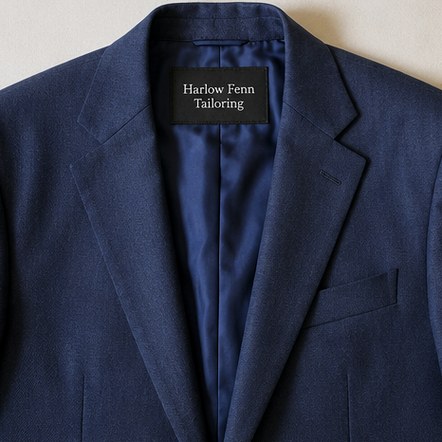
Is it a mistake to choose suit jacket construction on price alone?
Choosing suit jacket construction on price alone is a common first-order mistake, because the cheapest construction rarely matches how hard staff jackets are worn. Daily wear, long shifts and regular cleaning reward a half-canvas front, while occasional event wear or warm venues can suit an unstructured, soft-shoulder build.
Construction decides how the chest holds its shape after months of wear. A fully fused front is stiff and can develop the bubbling that makes a uniform look tired. A half-canvas tailored jacket drapes more naturally and recovers better between wears. An unstructured, soft-shoulder jacket trades some formality for comfort and movement, which suits staff who lift, reach or stand all day.
| How the team wears the jackets | Construction to consider |
|---|---|
| Every working day, client-facing, frequent cleaning | Half-canvas tailored |
| Warm venues, active roles, relaxed brand | Unstructured and soft-shoulder |
| Formal club or school occasions | Half-canvas blazer with crest |
| Leadership with very different builds | Made-to-measure within the same specification |
Ask what the price is actually buying. A construction that lasts longer and needs fewer replacements often costs the program less over its life than the one that looks cheapest on the first quote.
How do first-time buyers get suit jacket branding wrong?
First-time buyers usually get suit jacket branding wrong by making the logo too large, placing it where a tailored jacket does not carry decoration well, or branding every surface at once. On a suit jacket, restraint looks more expensive: a modest chest mark, an engraved button or a branded lining often says more than a big embroidered logo.
A tailored jacket has a lapel, a chest pocket and a curved front, so there is less flat space than buyers expect. A logo sized for a polo can dominate a jacket and pull the eye away from the person wearing it. Fine lettering and thin strokes can also fill in once they are stitched into wool, which is why simplifying artwork matters before the mockup.
Think about who sees which detail. Guests see the chest and the buttons. Staff see the lining every time they put the jacket on. That makes branded linings and engraved buttons a strong way to carry the brand without turning the jacket into a billboard, especially for law firms, banks and luxury hotels that prefer a quiet look.
- Keep the chest mark small and simple
- Pick thread colors that suit the cloth, not only the brand book
- Use buttons and lining for the second layer of branding
- Avoid placing decoration across seams or on the lapel roll
Should every employee get the same cut of suit jacket?
Every employee should get the same look, not necessarily the same cut. Ordering one men’s pattern for the whole team is a classic first-order mistake, because women’s fit jackets and different builds need their own patterns to look like the same uniform. The cloth, color, buttons and branding stay identical while the cut adapts to the wearer.
A women’s jacket is shaped differently through the shoulder, bust and waist, so a scaled-down men’s jacket never sits right. Custom Suit Jackets offers women’s fit jackets built to the same specification as the men’s run, so a mixed team still reads as one uniform in photos and on the floor.
The same thinking applies to roles. A concierge who stands all day and a manager who mostly sits in meetings can wear the same cloth and branding in slightly different builds. Agree on what must match, usually cloth, color, buttons, lining and logo, and let the rest follow the wearer.
What should you check on a suit jacket mockup before approving it?
Before approving a suit jacket mockup, check the logo size and position, the thread colors against the cloth, the button style and finish, the lining color, any names or monograms, and the jacket front itself. Rushing this step is how a small error ends up repeated across the whole order.
Custom Suit Jackets returns a free mockup within 24 hours, offers unlimited free revisions, and you pay nothing until you approve the design. That means there is no reason to approve a mockup you are unsure about. Ask for a change and look again.
Have the right people look at it. Marketing should confirm the logo and colors, operations should confirm the styles and roles, and someone who will actually wear the jacket should look at it as a garment, not a graphic. Spelling of names and monograms deserves a separate, slow read, because those are the errors staff notice first.
- Logo artwork, size and placement
- Thread colors on the chosen cloth
- Button style, finish and any engraving
- Lining color and any print
- Names or monograms, letter by letter
- Single or double-breasted front, vents and pockets
How do late or guessed sizes cause problems with suit jackets?
Late or guessed sizes cause problems because a suit jacket is fitted at the shoulder, and staff rarely know their true jacket size. Self-reported chest sizes, borrowed size charts and last-minute additions are the main reasons a few jackets in a team order do not fit on delivery day.
Collect sizes early, from the same method for everyone, and set a firm cutoff date before the order goes into production. Measuring a jacket that already fits the person well is more reliable than asking for a number. Our blog guide on sizing a whole team for jackets explains the process step by step.
Plan for people who join after the cutoff, too. Leaving them out of the first order is fine as long as you know how they will be handled later, through spares or a planned reorder.
How much time should you leave before staff need their suit jackets?
Leave enough time for the mockup, approval, production and handing out, then add a buffer. Custom Suit Jackets sends a mockup within 24 hours and standard turnaround is about 2 weeks after approval, with faster turnaround available with express shipping. The mistake is planning the delivery for the day before staff need the jackets.
Delivery is not the finish line. Jackets need to be unpacked, matched to names, tried on and, occasionally, swapped. A team that receives its suit jackets the night before a launch, a conference or a hotel opening has no room to fix a single problem. Count backward from the first day of wear and put the approval deadline on the calendar, not just the event date.
The site’s minimum order is 12 jackets, so a small pilot group is possible if you want staff to wear the jackets for a few weeks before a wider rollout. See how it works for the full sequence from quote to delivery.
Why should you write down the approved suit jacket specification?
Write down the approved suit jacket specification because the first order sets the standard for every jacket that follows. Without a record of the cloth, color, construction, buttons, lining, thread colors and logo placement, new hires and replacements drift away from the original look over time.
Keep the approved mockup, the cloth reference and the size list together in one shared place, and name an owner for the uniform program. When a new hire starts or a jacket is damaged, that person can request a matching jacket without starting from scratch. Custom Suit Jackets handles made-to-measure and reorders against the approved specification, which works best when your side keeps the same record.
Larger programs, such as hotel groups or companies with several offices, should read our page on bulk custom suit jackets with logo for coordinating sizes and deliveries across locations.
Frequently asked questions
How do we choose a suit jacket cloth weight for staff who work indoors and outdoors?
Suit jackets for staff who move between air-conditioned rooms and outdoor areas usually work best in a mid-weight cloth with natural recovery. Heavy cloth overheats outside, while very light cloth creases quickly when staff sit or drive. Tell Custom Suit Jackets where the team works and for how long each day, and the quote can recommend a cloth that suits both settings.
How large should an embroidered chest logo be on a custom suit jacket?
An embroidered chest logo on a custom suit jacket should be small enough to sit comfortably above the breast pocket without touching the lapel or crossing a seam. Most brands look sharper with a modest, simplified mark than a large one. The free mockup shows the logo at its true position, so you can ask for it smaller or larger before approving.
Why do suit jackets look different in person than in a swatch photo?
Suit jackets look different in person because screens change color, especially dark navy, charcoal and black, and photos flatten texture and sheen. Lighting matters too: a cloth that looks rich in daylight can look shiny under bright showroom or ballroom lights. Ask about the weave and finish as well as the color, and consider where the jackets will be seen most.
Can we change the suit jacket design after approving the mockup?
Suit jacket design changes are simple before approval, because Custom Suit Jackets offers unlimited free revisions and you pay nothing until you approve. After approval the order moves into production, so later changes may affect the schedule. Treat the approval as the final check, and ask for another revision whenever anything about the logo, buttons or lining feels uncertain.
How do we avoid spelling errors in names or monograms inside suit jackets?
Names and monograms inside suit jackets are easiest to get right when they come from a single typed list rather than handwritten forms or emails. Ask each employee to confirm their own spelling, check initials and accents, and read the final mockup letter by letter. One person should own the list so last-minute changes do not get lost.
What happens if our suit jackets arrive the day before an event?
Suit jackets that arrive the day before an event leave no time to fix a size swap, a missing name or a jacket that needs pressing. Standard turnaround at Custom Suit Jackets is about 2 weeks after approval, so plan the approval date from the first day of wear, not the delivery date, and keep a few days spare for handing jackets out.
Do suit jacket vents matter for staff who sit or drive a lot?
Suit jacket vents matter for staff who sit, drive or reach often, because vents let the back of the jacket open instead of bunching. Side vents generally keep a cleaner line when someone sits, while a center vent is a classic, simpler look. Mention how your team moves during a shift when requesting a quote so the jacket front and back suit the job.
Can a pocket square or lapel pin replace embroidery on staff suit jackets?
Staff suit jackets can carry the brand through a lapel pin or a coordinated pocket square instead of embroidery, which suits teams that want a discreet look. The trade-off is that pins and squares are easy to lose or forget. Many teams pair them with a branded lining or engraved buttons from Custom Suit Jackets so the brand stays built in.
Is it a mistake to choose a very light color for staff suit jackets?
Very light suit jackets can be the right choice for summer venues and resorts, but they show marks, shine and wear faster than navy or charcoal. They also reveal any lining color through the cloth. If staff work long shifts or handle food and drink, a mid-tone or darker cloth usually keeps the uniform looking consistent for longer.
Who inside a company should approve a custom suit jacket mockup?
A custom suit jacket mockup is best approved by a small group: someone from marketing to confirm logo and colors, someone from operations to confirm roles and styles, and at least one person who will wear the jacket. A single named decision maker should give the final approval so feedback does not stall the order or contradict itself.
Should we order a different style of suit jacket for a short pilot first?
Suit jackets for a pilot group should use the exact style you expect to roll out, otherwise the trial tells you little. Custom Suit Jackets has a minimum order of 12 jackets, so a small department can wear the chosen cloth and construction for a few weeks before the full team orders. Collect honest feedback on comfort, creasing and fit.
Get a free mockup for your suit jackets
Send your logo or idea and the quantity you have in mind. Custom Suit Jackets returns a free mockup within 24 hours, you approve the design before anything is produced, and standard turnaround is about two weeks with faster options available. Get a custom quote.