How Many Custom Suit Jackets Should You Order? Spares, New Hires and Reorders
Order custom suit jackets for everyone who will wear one this season, split by fit and role, plus spares in your most common sizes and a buffer for near-term hires. Custom Suit Jackets starts at a minimum of 12, mixes sizes and fits in one order, and keeps your approved specification so later reorders match the first run.
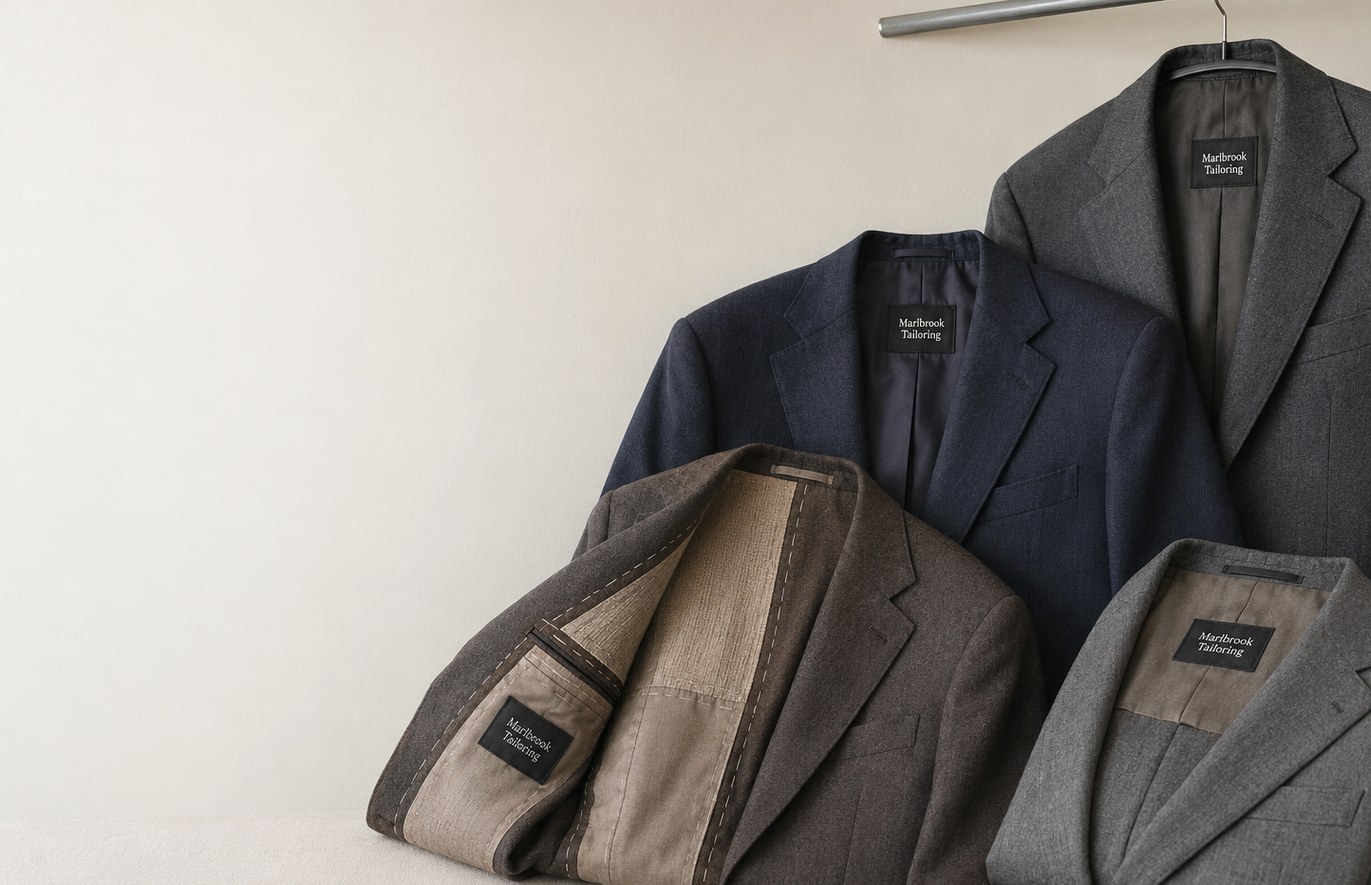
- Minimum order is 12 jackets, mixed across sizes and fits
- Put spares in your most common sizes, not every size
- Count each fit, style and role as its own group
- Free mockup within 24 hours; production about 2 weeks after approval
- Keep the approved specification on file so reorders match
How many custom suit jackets should a team order?
Order custom suit jackets for every person who will wear one in the first season, plus a small buffer of spares in the sizes your team uses most. Custom Suit Jackets starts at a minimum of 12 jackets, so even a compact front-of-house team or a single sales office can order a matched run without padding the count with jackets nobody needs.
The right number is rarely just your current head count. Suit jackets are sized garments, not one-size giveaways, so the real question is how many people in which sizes, cuts and roles. A team of mixed men’s and women’s fits, a few hard-to-fit builds and a hiring plan for the next quarter all change the count.
Start with three groups:
- Current wearers: everyone who needs a jacket on day one, with a confirmed size for each person.
- Near-term joiners: roles you expect to fill before a reorder would realistically arrive.
- Spares: a few jackets in the most common sizes to cover damage, spills, lost garments and the person who was measured wrong.
Add those groups together and you have a planning number. The sections below explain how to size each group so the order fits the team you will have, not just the one you have today.
How do you count spares for suit jackets without overbuying?
Count spares for suit jackets by size, not as a single lump. A spare only helps if it fits the person who needs it, so put your buffer into the sizes that appear most often on your size sheet and skip spares in the outlying sizes, where a reorder or a made-to-measure jacket is the better answer.
Look at your size sheet once everyone has been measured. Most teams cluster around a few chest and shoulder sizes in each fit. Those clusters are where the spares belong. A hotel with a large banquet staff will see its spares used quickly in the middle sizes, while a small executive team may need almost none.
Think about how hard the jackets work. Hospitality and event jackets get spilled on, snagged and sent to the cleaner often, so a rotation buffer keeps someone in uniform while a jacket is away. Corporate jackets worn a few days a week need less cover. A useful way to decide:
- Heavy daily wear: hold spares in every common size, because a jacket at the cleaner leaves a gap on the floor.
- Regular office wear: hold spares in the top sizes only.
- Occasional wear: events, awards nights and boardrooms rarely need spares beyond a jacket or so for a late addition.
Spares also protect you from sizing mistakes. If one person’s measurement was taken over a heavy sweater, a spare in the next size down solves it the same week.
Should you order jackets for new hires now or later?
Order jackets for new hires now if you know the roles will be filled before a reorder could arrive, and later if hiring is uncertain. A new-hire buffer in your common sizes means a person who starts next month looks like the rest of the team on their first shift, instead of waiting for a separate run of custom suit jackets.
The trade-off is simple. Ordering ahead costs you jackets that may sit on a shelf; ordering later costs you a gap between the start date and the jacket. Because standard turnaround at Custom Suit Jackets is about 2 weeks after you approve the design, plus delivery, a new hire who starts with short notice will usually wear their own clothes for a while if there is no buffer.
Teams with steady turnover, such as hotel front desks, restaurants and showroom floors, almost always benefit from a new-hire buffer. Teams that hire in waves, like a brokerage opening a new office or a school adding a staff intake each term, can time a reorder to the wave instead.
Names are the one detail to plan around. If you put individual names inside each jacket, spare jackets for new hires can be ordered without a name, or with a neutral inside label, so they can go to whoever joins next.
What changes the count: fits, roles and jacket styles
The count of custom suit jackets changes most when a team needs more than one fit, more than one style or different jackets for different roles. Each combination is its own small group with its own spares, so a team that looks like one order on paper can be several sub-orders once you split it by fit and role.
Common splits that affect the numbers:
| Split | What it means for the count |
|---|---|
| Men’s and women’s fit | Women’s fit jackets are cut differently through the shoulder, chest and waist, so each fit needs its own sizes and its own spares. Ordering women’s jackets as smaller men’s sizes is a false economy. |
| Front of house and management | Managers may wear a half-canvas tailored jacket while floor staff wear an unstructured or soft-shoulder jacket. Count each style separately. |
| Daily wear and event wear | A team that wears jackets every day and also needs a dressier jacket for an awards night is ordering two quantities, not one. |
| Named and unnamed jackets | Personalized jackets are tied to a person; unnamed spares can move between people. Keep both in the plan. |
None of these splits should push you into an awkward count. The 12-jacket minimum applies to the order, and Custom Suit Jackets can mix fits and sizes within it, so a team of a dozen people in two fits is a normal order.
How do you stage reorders so new jackets match the first run?
Stage reorders of custom suit jackets by locking the specification of the first run and reordering against it. When the cloth, color, construction, lining, buttons and logo placement are written down and approved once, every later batch can be made to the same record, which is what keeps a jacket ordered next year looking like the jackets already on the floor.
Mismatched reorders usually come from small drift: a slightly different shade of navy, a new button, a logo moved a little higher. Planning quantities in stages works only if the stages match. Keep these on file after your first order:
- The approved mockup, including logo size, position and thread colors.
- The cloth and color reference for the run.
- The construction and style for each role, such as half-canvas or unstructured.
- Your size sheet, with each person’s size and fit.
- Lining, button and inside-label choices.
With that record, a reorder is a short conversation instead of a fresh project. The made-to-measure and reorders page explains how Custom Suit Jackets handles repeat runs and one-off jackets for people who fall outside the standard sizes.
A staged plan often looks like this: a first order for current wearers and common-size spares, then smaller reorders timed to hiring waves or the start of a busy season, each made to the same approved specification.
Is it better to order one large run or several smaller ones?
One larger run of custom suit jackets is better when the team is stable and you want every jacket from the same production batch. Several smaller runs are better when the team is growing, roles are still changing or you are not yet sure how the jackets will be used day to day. Many teams combine both.
A single run gives you the simplest match, one approval and one delivery. It suits a hotel outfitting a new property, a school issuing blazers to an incoming group, or a company dressing everyone for a launch on a fixed date. The risk is buying for people who never join.
Several smaller runs spread the commitment. A first order meets the 12-jacket minimum for current wearers, and later runs follow real hiring and real wear. The risk is drift between batches, which the reorder record above prevents. Ask yourself:
- Will the team look meaningfully different by next year?
- Is there a fixed date when everyone must be in matching jackets?
- Do you have storage that keeps spare jackets clean, hung and away from damp?
If the answers point both ways, order the first run for the people you are sure of, hold a modest buffer, and plan the next run against your hiring calendar.
What information should you gather before asking for a quote?
Before asking for a quote on custom suit jackets, gather a draft head count by fit and role, a rough size spread, your logo, the jacket style you have in mind and the date you need jackets in hand. Custom Suit Jackets uses that brief to return a free mockup within 24 hours, and the quantity can be refined while you review it.
You do not need final sizes to start. A rough split is enough for the quote and the design. Final sizes can come from the team once the design is close to approval. The how it works page walks through each step, and you pay nothing until you approve the design.
A short checklist to send with your request:
- Number of wearers today, split by men’s and women’s fit.
- Roles that need a different style, such as managers or event staff.
- Whether you want names or initials inside each jacket.
- The spares and new-hire buffer you are considering.
- Your in-hands date, so the timeline accounts for about 2 weeks of production after approval.
Unlimited free revisions mean you can adjust the logo, lining or count as the plan firms up. When the numbers are ready, request a custom quote and the team will help you size the order around the people who will actually wear it.
Frequently asked questions
How do I decide which sizes need spare suit jackets?
Spare suit jackets belong in the sizes that appear most often on your team's size sheet. Once everyone is measured, look for the chest and shoulder sizes that repeat in each fit and place your buffer there. Outlying sizes are better covered by a quick reorder or a made-to-measure jacket, because a spare in an unusual size often sits unused.
Can spare custom suit jackets be ordered without names inside?
Spare custom suit jackets can be ordered without names, or with a neutral inside label, so they can go to whoever needs one next. Custom Suit Jackets can mix named jackets for current staff and unnamed spares in the same order, which keeps the buffer flexible for new hires, replacements and the occasional sizing mistake on the original sheet.
Does the minimum of 12 apply to each size or to the whole order of suit jackets?
The minimum of 12 applies to the whole order of suit jackets, not to each size or fit. Custom Suit Jackets lets you spread those jackets across men's and women's fits and many sizes, so a small team with varied builds can still order a matched run without buying extra jackets in any single size.
Should a growing company order suit jackets for next year's hires now?
Custom suit jackets for next year's hires are usually better ordered later, against a real hiring plan. A short-term buffer in common sizes covers people starting soon, while hires further out can be added in a reorder made to the same approved specification. That way you avoid paying for jackets that may sit on a shelf for months.
How should a hotel plan suit jacket quantities for seasonal staff?
Suit jackets for seasonal hotel staff are easiest to plan as a reusable pool in common sizes rather than personal issue. Custom Suit Jackets can make the pool without names inside, so each season's team draws from the same rack. Order the pool before the busy period and check its condition at the end of each season.
What is the best way to store spare custom suit jackets?
Spare custom suit jackets last best hung on shaped hangers in breathable garment bags, in a cool, dry room away from direct light. Folding them in boxes creases the chest and lapels and can leave marks that a cleaner struggles to remove. Label each bag with size and fit so the right spare is easy to find.
Can we add a few jackets to an existing order of suit jackets later?
Adding jackets to an earlier order of suit jackets works best when the first run's specification is on file: cloth, color, construction, lining, buttons and logo placement. Custom Suit Jackets uses that record so later jackets match. Reorders follow the same steps as a first order, with a mockup to confirm and about 2 weeks of production after approval.
How many custom suit jackets does a team need if staff work rotating shifts?
Custom suit jackets for rotating shifts should cover every person who works a shift, plus a rotation buffer for jackets at the cleaner. When the same people rotate through, each needs their own jacket in their own size. Shared jackets only work when sizes overlap closely, so most shift teams combine personal jackets with a few common-size spares.
Should managers and front-line staff be counted separately in a suit jacket order?
Managers and front-line staff should be counted separately in a suit jacket order whenever they wear different styles, such as a half-canvas tailored jacket for managers and an unstructured jacket for floor staff. Each style needs its own size spread and its own spares. Custom Suit Jackets can quote and mock up both styles together.
What happens to the quantity if someone's suit jacket size was measured wrong?
A wrongly measured suit jacket is one of the main reasons to keep spares in common sizes. If a person was measured over a thick layer or the tape slipped, a spare in the neighboring size solves it straight away. Without a spare, Custom Suit Jackets can make a replacement in a reorder to the same specification.
Is it cheaper per jacket to order more custom suit jackets at once?
Larger orders of custom suit jackets often bring the cost per jacket down, because setup, digitizing the logo and preparing the design are shared across more pieces. Custom Suit Jackets quotes each order on its style, construction, decoration and quantity, so the best way to compare a larger run with staged reorders is to request a quote for both.
How far ahead should we confirm final sizes for a suit jacket order?
Final sizes for a suit jacket order should be confirmed before you approve the design, because production starts from the approved order. Custom Suit Jackets returns a mockup within 24 hours, and the standard turnaround is about 2 weeks after approval, so collect sizes while you review the design to keep the in-hands date safe.
Get a free mockup for your suit jackets
Send your logo or idea and the quantity you have in mind. Custom Suit Jackets returns a free mockup within 24 hours, you approve the design before anything is produced, and standard turnaround is about two weeks with faster options available. Get a custom quote.